AI for Public Relations: The Practitioner's Honest Take
Summary
AI for public relations has reached near-universal adoption among PR professionals. But adoption does not equal effectiveness. This guide maps the tasks where AI genuinely accelerates PR work, such as first drafts, media monitoring, and brainstorming, versus where it creates new problems: spokesperson quotes, crisis tone, and journalist relationship judgment. It also makes the case for AI rewriting tools over general LLMs when register and voice are what actually determine whether a pitch gets read.

Ninety-one percent of PR professionals now use at least one AI tool in their daily workflow. That is not a trend. That is the current baseline for AI for public relations. The question worth asking in 2026 is not whether to adopt these tools but which tasks actually benefit, and which ones only feel faster. This guide draws the line, with specific attention to where a rewriting pass matters more than a better generation prompt.
Adoption and effectiveness are not the same thing. Most articles on AI for PR list the top ten tools. What is rarer is clarity on which tool does which job and where the handoff between layers belongs.
Most PR Teams Are Already Users. The Dividing Line Is Where They Aim the Tool.
Ninety-one percent adoption means AI is now standard infrastructure for PR teams, not a competitive edge in itself. The edge comes from how teams use it.
Survey data from 2026 puts the most common use case at brainstorming, at 73% of PR professionals. Writing or refining content follows at 68%. A smaller share uses AI for what it is best positioned to handle: monitoring brand mentions at scale, summarizing large volumes of media coverage, and building journalist targeting lists from recent bylines.
Teams reporting the strongest media placement results are not producing more press releases faster. They are using AI for research and coverage analysis, then investing the recovered time in the pitch itself. Volume stays roughly flat. Targeting gets sharper.
That distinction matters before adding tools to a stack. A media monitoring platform with AI summarization serves a different function than a general-purpose LLM you prompt for first drafts. Both are useful. They are not useful for the same things.
Press Releases: The First-Draft Problem Is Solved. The Quote Problem Is Not.
Press releases have a structure that does not change much across sectors: news hook, the claim, one or two spokesperson quotes, supporting data, boilerplate. That structure is fully templatable. AI handles it without strain.
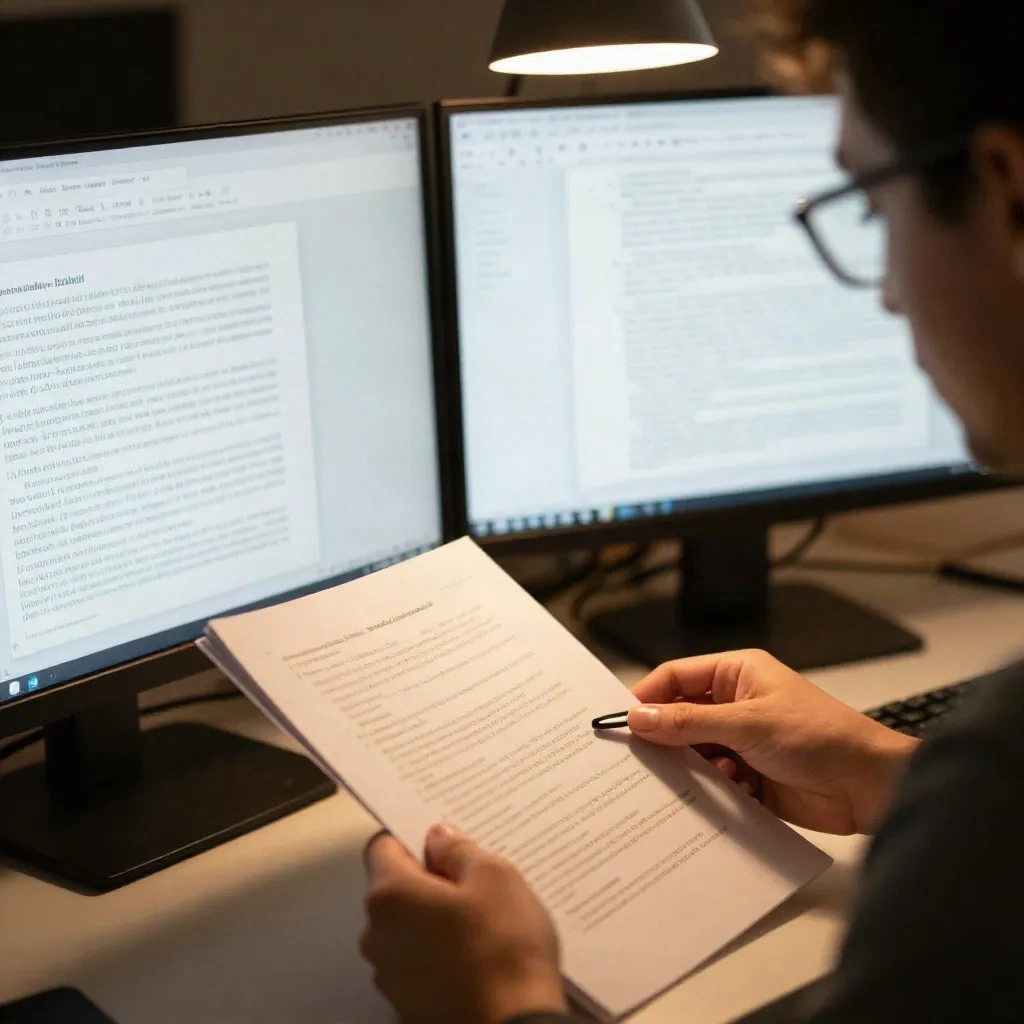
The practical test: paste a 200-word product brief into any capable language model and ask for a draft aimed at a technology trade journalist. The output arrives in under two minutes. The dateline is there. The boilerplate is in place. The opening paragraph leads with the news. The structure is correct.
What the draft will not have is a spokesperson quote that reads like a real person.
AI-generated quotes share a specific failure pattern. They express enthusiasm without taking a position. "We are excited to bring this solution to our customers" is a sentence no journalist needs in a story. A quote that earns placement either names a tension, cites a specific number, or makes a prediction that could turn out to be wrong. Generative AI produces the version that cannot be argued with. That is exactly the problem.
At a second read, the spokesperson sounds like a brand rather than an individual. That gap is the rewrite trigger.
The Pitch Voice Problem: Why AI Generation Creates a Second Task, Not One Fewer
Seventy-two percent of journalists report concern about factual errors in AI-generated PR content. Eighty-six percent will reject a pitch immediately if it does not match their beat. But there is a third rejection pattern that surveys do not capture: the pitch that reads as machine-generated.
Journalists process high volumes of pitches daily. The ones that read as AI-generated have a recognizable texture. Fluent sentences, correct grammar, no claim specific enough to be wrong, no opening that names what the journalist covers before it names the product. They are easy to pass on because they ask nothing particular of the reader.
The mistake is using AI to generate the pitch and then sending it. The correct workflow is using AI to generate the pitch and then running a rewriting pass tuned to the journalist's beat and register.
The concrete test: take a generated pitch, open a rewriting tool, set the tone to direct and informal, and compare the two versions. The rewritten version opens with the journalist's angle rather than the product launch date. It removes the paragraph that explains what the product category is. That paragraph appears in nearly every AI-generated pitch. It is almost never necessary when writing to a specialist journalist who covers that category every week.
What changes in practice is the opening sentence. The AI draft opens with the product. The rewritten version opens with the journalist's beat.
What AI Does Not Handle in PR (Worth Naming Directly)
This is the list worth reading before expanding a PR tech stack.
Journalist relationships. AI can generate a list of journalists who cover a beat based on recent bylines. It cannot tell you that a particular journalist is three weeks into an investigation of a company adjacent to yours and will not engage with any pitch until that piece publishes. Relationship context lives with the account team.
Crisis tone. A crisis statement requires a register calibrated to who was affected, what is already publicly known, and what the organization has already said on record. Generative AI defaults to calm, corporate, and liability-aware copy. In many crisis situations, that register reads as evasion rather than accountability. The practitioner has to override it deliberately and rewrite the register, not just the word choice.
Real spokesperson voices. AI produces quotes that sound like brand communications rather than individuals. A CFO who "remains committed to transparency and stakeholder value" is interchangeable with the CFO at any other company. That is not a quote a journalist will use in a story that needs a human source.
Timing judgment. A pitch submitted the day a major competitor announces a restructuring is either a gift or a disaster depending on the specific story. AI does not know what happened that morning without being explicitly briefed. And even with briefing, the call belongs with the practitioner.
Three tasks where AI clearly helps in PR: first drafts at scale, media monitoring summaries, and angle generation at the start of a campaign. Two where it stalls without a human in the loop: anything requiring news judgment, and anything requiring relationship history.
When a Rewriting Pass Outperforms Starting from Scratch
There is a specific scenario where an AI rewriting tool consistently outperforms a general LLM: when the content already exists but the register is wrong for the target reader.
Scenario one: a technical white paper needs to become a 300-word summary for a general-interest journalist rather than a specialist. A general LLM will compress the content but will tend to keep the formal hedges and transition phrases that slow the opening. A rewriting tool calibrated to register will cut those hedges, sharpen the opening claim, and land in the right tone in one pass.
Scenario two: a press release in formal corporate English needs to reach an audience of startup founders. Formal corporate English is a rejection signal in that context. The content is correct. The register is wrong. A tone-specific rewriting pass closes that gap without a full redraft.
Scenario three: a non-native English speaker on the team produced the first draft. The argument is solid, the facts are accurate, but phrasing patterns from the source language are visible in the sentence structure. A rewriting pass calibrated to natural business English removes those patterns without altering the sourced claims or the meaning.
In all three cases, the bottleneck is not generating content. It is calibrating register after the draft already exists. That is the specific problem AI rewriting tools are built to solve, and where general-purpose LLMs, which are optimized for generation rather than tone-specific revision, are noticeably less precise.
The real question is not whether AI writes well. It is whether it writes in the right register for the right reader on the right day. That is a narrower question, and a more useful one.
The Two-Layer Stack That Holds Under Deadline Pressure
PR teams reporting the strongest AI-assisted results in 2026 are not using one tool for everything. They run two distinct layers with different functions.
Layer one is generative: ChatGPT, Claude, or a PR-specific platform such as Muck Rack's PressPal.ai or Press Ranger, which build structured workflows on top of a foundation model. This layer handles first drafts, media list research, briefing summaries, and coverage recaps. It solves the blank-page problem and the monitoring volume problem.
Layer two is revision-focused: a rewriting tool that handles voice calibration, tone matching, and register adjustment. This layer runs after the draft exists and before anything reaches a journalist or editor. It is also what converts a technically correct spokesperson quote into a sentence a journalist might actually use.
What the stack does not replace is the senior practitioner who knows when a pitch reads as tone-deaf given what is in the news cycle. AI predicts based on patterns. Practitioners judge based on context. Those are not the same operation. Conflating them is the most common error in AI-for-PR rollouts.
The question to ask before sending anything is not whether the AI draft is technically correct. It is whether it sounds like someone who read the journalist's last three pieces before writing to them. That judgment, and the rewriting pass that follows it, still belongs to the practitioner.
The AI handles structure and speed. The rewriting layer handles register and voice. The practitioner handles everything that requires judgment.
That division holds up better than the alternative, which is generating content from scratch and hoping the first draft is close enough to send.