How to Paraphrase a Sentence: 4 Moves That Actually Work
Summary
To paraphrase a sentence, rebuild it around the idea instead of swapping words. Close the source, write from memory using one structural move (reorder ideas, change the part of speech, split or merge, or shift the angle), then compare with the original. Check that facts and hedging survive and that no long word strings match. Keep technical terms and cite the source. AI rewriters can offer options, but you decide the structure.
You have a sentence from a source and you need it in your own words. The quick fix is to swap a few terms for synonyms, and that is exactly what fails. Here is how to paraphrase a sentence properly: rebuild it around the idea, change the structure, keep the facts, and check the result against the original. The method below takes about two minutes per sentence, and it works with or without an AI rewriter.
Why does swapping synonyms not count as a paraphrase?
Take this sentence: "Remote workers report higher productivity when they control their own schedules." Now the synonym swap: "Distant employees state greater efficiency when they manage their own timetables."
Same skeleton, same order, same rhythm. Only the vocabulary moved. At the next read, you notice that "distant employees" also changes the meaning, since remote and distant are not interchangeable here.
Writing centers have a name for this result: patchwriting. As the Ontario academic writing guide on paraphrasing vs. patchwriting puts it, a patchwritten sentence stays too close to the source's structure or wording, and many institutions treat it as plagiarism even when the source is cited. So the real test is not "did I change words?" but "could someone line this up against the original and see the same skeleton?"
What are the four moves that actually rebuild a sentence?
Trying every trick at once makes a mess. Pick one or two moves per sentence, and pick them on purpose.
Move 1: Flip the order of ideas
Start with the part the original put last. "Remote workers report higher productivity when they control their own schedules" becomes "Control over their schedules is what lifts productivity, according to remote workers." The facts are identical. The sentence now opens on a different idea, so it reads differently from the first word.
Move 2: Change the part of speech
Turn verbs into nouns, or nouns into verbs. "They control their schedules" becomes "schedule control". "Productivity rises" becomes "a rise in productivity". This is the move that most reliably breaks the original rhythm, because every word around the changed one has to adjust.
Move 3: Split or merge
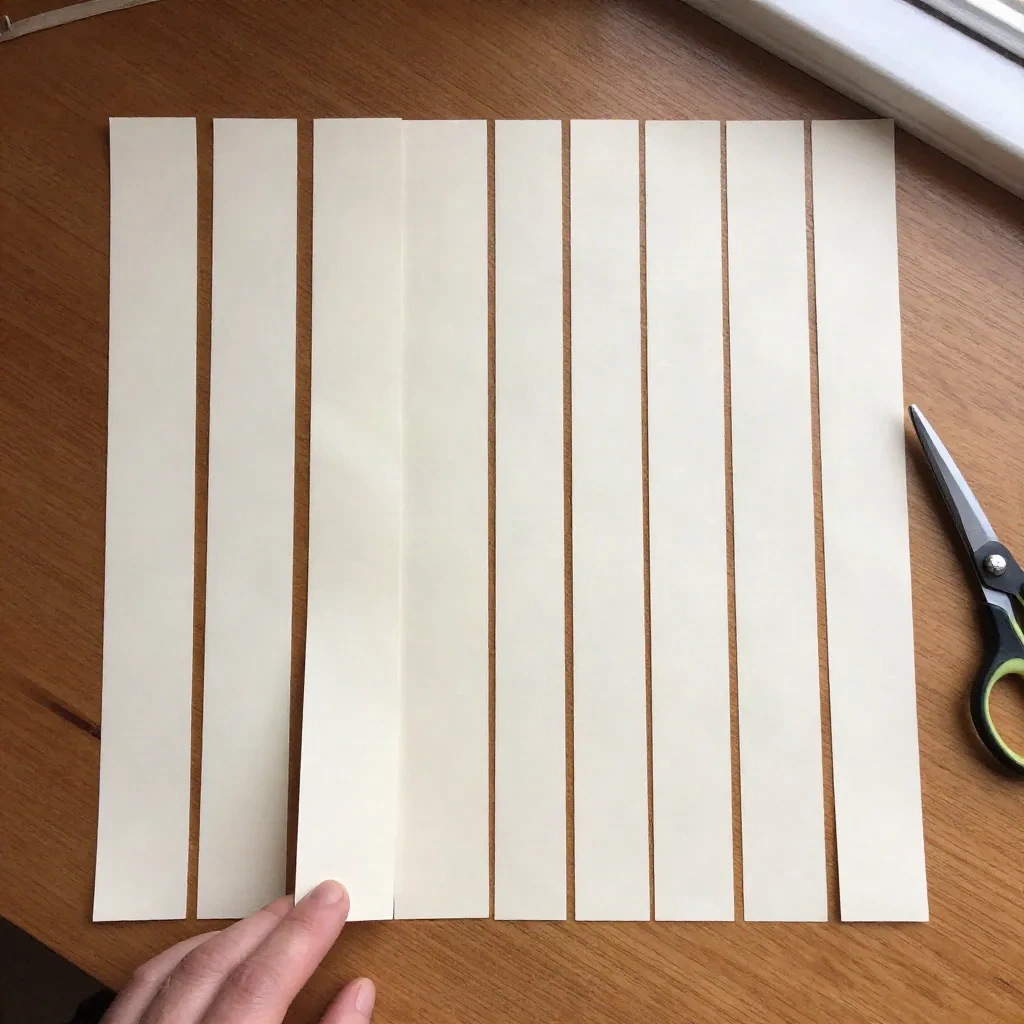
A long sentence with two ideas often becomes two sentences. Two short sentences with a causal link often become one. Splitting is the safer move for a non-native writer, since shorter sentences leave fewer places to slip on grammar.
Move 4: Change the angle, not the claim
Active to passive is the cheap version, and a good editor allows one passive per paragraph at most. The better version shifts the subject. Instead of "workers report", write "survey respondents link". Only do this if the new subject is true to the source. If the study measured self-reports, you cannot upgrade them to measured facts.
What does a full before/after look like?
Here is one sentence taken through the process, with the moves named.
Original: "Because the committee had not received the revised budget before the deadline, it postponed its decision until the following quarter."
Synonym swap (fails): "Since the board had not obtained the updated budget prior to the cut-off, it delayed its ruling until the next quarter."
Rebuilt (moves 1 and 3): "The budget arrived late. The committee pushed its decision to the next quarter."
The rebuilt version is 15 words against 22 in the original, and no phrase of three words or more survives from the source. That is the number to look at: shared word strings. If you can find a run of four or five identical words, rewrite that stretch.
One caution: the rebuilt version dropped "revised". Whether that matters depends on your context. In a legal summary, the word "revised" could change the whole point. In a news recap, it may be noise. Cutting is a decision, so make it deliberately.
How do you check meaning without re-reading the source with fresh eyes?
The check has two halves, and most people only do the second.
First, write without the source in view. The CASRAI guide to paraphrasing recommends reading the material, putting it away, and writing from memory, because writing with the source open is what produces patchwriting even when the writer has no intention to copy. If you cannot write the sentence from memory, you have not understood it yet. That is useful information, not a failure.
Second, compare afterwards. Put both versions side by side and check three things:
Facts: every number, name and date from the original is still there, or you removed it on purpose.
Strength: "may reduce" has not become "reduces". Hedging words are the first casualties of a rewrite.
Wording: no long shared word strings, and no distinctive term from the source copied without quotation marks.
A quick test for each move
After each rewrite, read only your version aloud, then ask one question: if a stranger read it with no source nearby, would they get the same claim? If yes, the move worked. If they would ask "wait, who said that?" or "how many?", you cut something that carried weight. Put it back.
Short sentences are the best practice ground. A sentence of fifteen words offers a handful of options, and you can compare three attempts in under a minute. Long academic sentences reward a different habit: mark the main clause first, then rebuild around it.
What should you keep word for word?
Not everything can be rewritten, and trying to is how meaning breaks. Technical terms, proper names, and defined concepts stay as they are. "Machine learning", "cost of goods sold" and "confirmation bias" have no honest synonyms. Swapping them signals that you do not know the field.
Direct quotes are the other exception. If a phrase is striking, or if the exact wording is the evidence, quote it and cite it. A paraphrase is a different tool: it is for ideas, not for lines whose power lies in the phrasing.
And a paraphrase still needs a citation. Changing the words changes the wording, not the ownership of the idea.
When does an AI rewriter help, and when does it bite?
Three cases where it helps, two where it stalls.
It helps when you want options. A tool like QuillBot has modes such as Standard, Fluency, Formal and Academic, so you can see the same sentence in four registers in a few seconds. It also helps as a second pair of eyes: paste your own rebuilt sentence and see what the tool would change, which shows you where your version is still stiff.
Wordtune works at the sentence level and offers several rewrites per sentence, with options to shorten, expand or shift tone. That makes it a better fit for this exact job than a tool built for whole paragraphs, because you choose among alternatives instead of accepting one output.
It bites in two situations. First, when the tool keeps your skeleton. Most paraphrasers lean toward word-level substitution, so the output of a quick paste is often the synonym swap from earlier with better grammar. Second, when meaning shifts quietly: a hedge disappears, a number gets rounded, a technical term gets "improved". You will not see it unless you run the three-point check above.
Free tools carry limits too. Scribbr offers a free paraphrasing tool with no sign-up and a per-input limit of about 125 words, which suits one sentence or a short paragraph. It states that the tool is powered by QuillBot, so do not expect a second opinion from it.
Should you let a grammar checker do the final pass?
Yes, but for a different job. Once your rebuilt sentence is correct in meaning and structure, a checker catches the small stuff: agreement, punctuation, a clumsy preposition. Grammarly, for example, works inside Gmail, Google Docs and most browsers, and its free tier covers basic grammar and spelling.
What it should not do is choose your structure for you. The structural decisions in moves 1 to 4 are yours. The checker polishes; it does not decide what the sentence says.
What are the five slips that give a paraphrase away?
Three are obvious, two are subtle. Here are all five.
Keeping the first three words. The reader's eye locks onto the opening. Change it.
Same sentence length, same clause count. A rewrite that mirrors the original's shape reads as a copy even with new words.
Upgrading certainty. "Suggests" to "shows", "some" to "most". This is also how a paraphrase becomes a misquote.
Dropping the citation because "it's my wording now". It is not your idea.
Rewriting the technical term. If the field has a standard word, use it.
How do you make this a habit instead of a rescue?
Build a short routine and run it every time. Read the sentence twice. Close the source. Write it from memory using one structural move. Compare the two. Cite.
For a heavy paraphrasing job, such as a literature review or a grant background section, do it in batches of ten sentences and keep the originals in a second column of your notes so the comparison is quick. Writers who work this way spend more time on the first pass and almost no time repairing sentences later.
A final practical rule: if a sentence resists every move, it is probably a quote. Put it in quotation marks, cite the page, and move on. Forcing a paraphrase of a sentence that cannot be paraphrased is how meaning gets lost.